

If you’re looking for a reliable hosting solution, you’ve probably come across two common options: Cloud Servers and VPS Servers.
At first glance, they may seem very similar. Both provide dedicated resources, administrator access, and the ability to run websites, applications, databases, and custom software.
However, there are important differences in how they work, how they scale, and which workloads they are best suited for.
In this guide, we’ll explain Cloud Server vs VPS Server in simple language so you can choose the right solution for your needs.
Cloud Server vs VPS Server: Quick Overview
A VPS (Virtual Private Server) is a virtual machine created on a single physical server.
A Cloud Server is a virtual server that operates within a cloud infrastructure, where resources can be distributed across multiple physical machines.
Both offer significantly more control than shared hosting, but they serve different purposes.
What Is a VPS Server?
A VPS Server is created by dividing a physical server into multiple isolated virtual environments.
Each VPS receives its own:
- CPU resources
- RAM allocation
- Storage space
- Operating system
- Administrator access
Unlike shared hosting, your resources are not directly shared with other users.
A VPS Server is commonly used for:
- Business websites
- E-commerce stores
- Forex trading
- Web applications
- Python projects
- Game servers
- Development environments
What Is a Cloud Server?
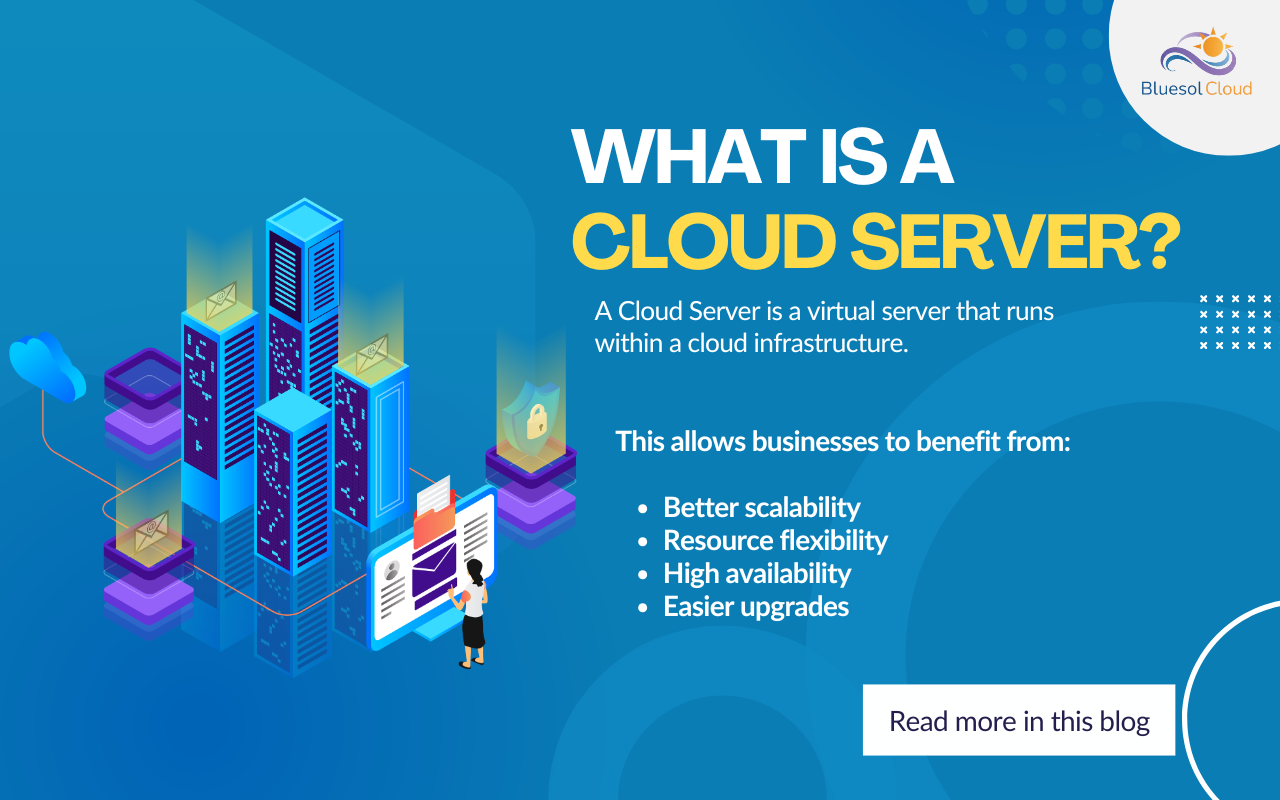
A Cloud Server is a virtual server that runs within a cloud infrastructure.
Instead of relying entirely on a single physical machine, cloud resources are distributed across a larger network of servers. Cloud Servers are built on modern cloud computing infrastructure.
This allows businesses to benefit from:
- Better scalability
- Resource flexibility
- High availability
- Easier upgrades
Cloud Servers are often chosen by growing businesses that expect changing workloads and traffic patterns.
Administrator Access and Control
One of the first questions many users ask is:
“Will I get full control of the server?”
In most cases, yes.
Both Cloud Servers and VPS Servers typically provide:
- Root access (Linux)
- Administrator access (Windows)
- Software installation permissions
- User management
- Firewall configuration
- Remote access
This means you can install and manage applications yourself without depending on a hosting provider.
What Software Can You Run?
Both Cloud Servers and VPS Servers can run a wide variety of software.
Web Hosting & Development:
- WordPress
- cPanel
- DirectAdmin
- Apache
- Nginx
- MySQL
- PostgreSQL
Programming & Development:
- Python
- Node.js
- Docker
- Git
- Laravel
- Django
Trading Applications:
- MetaTrader 4 (MT4)
- MetaTrader 5 (MT5)
- Trading Bots
Streaming & Media Applications:
- OBS Studio
- FFmpeg
- Plex
- Jellyfin
Business Applications:
- CRM Software
- ERP Software
- Internal Company Tools
The software itself usually does not determine whether you need a VPS or a Cloud Server.
The amount of resources required is often the deciding factor.
Cloud Server vs VPS Server Comparison
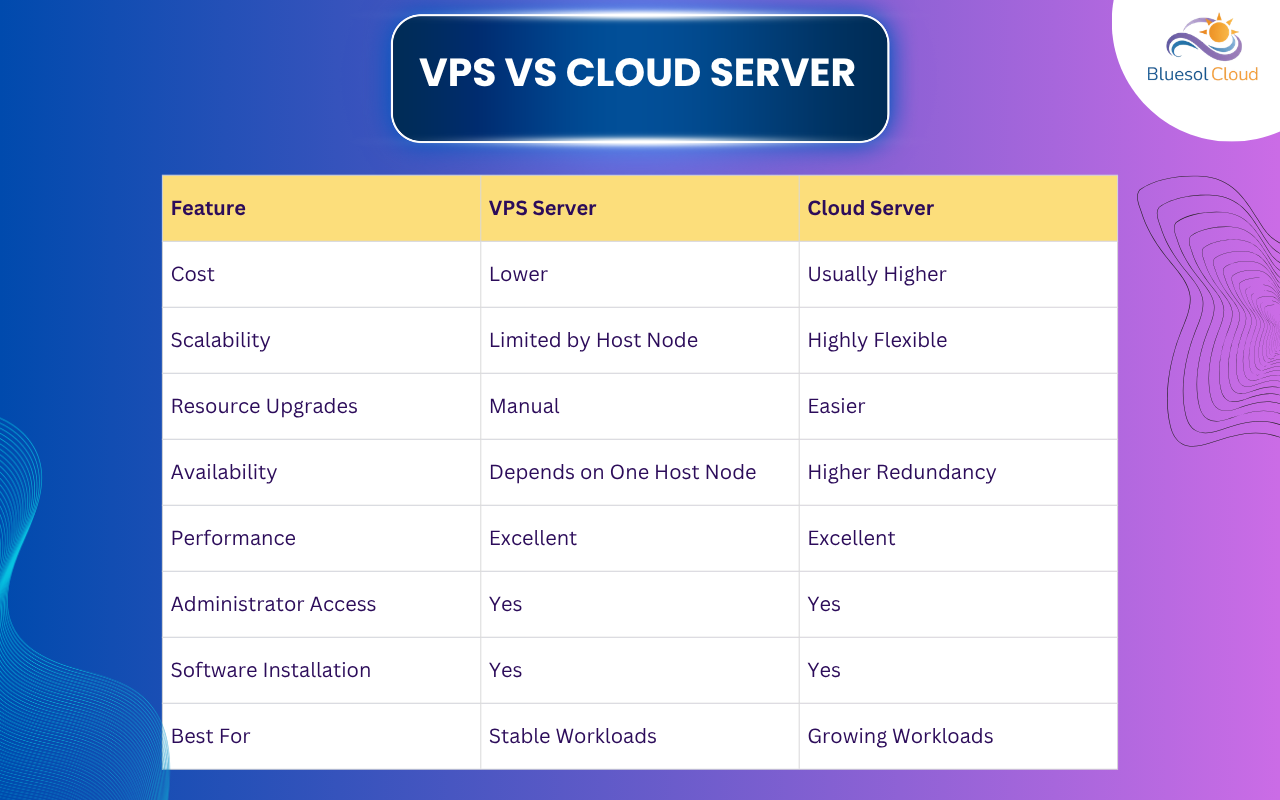
| Feature | VPS Server | Cloud Server |
|---|---|---|
| Cost | Lower | Usually Higher |
| Scalability | Limited by Host Node | Highly Flexible |
| Resource Upgrades | Manual | Easier |
| Availability | Depends on One Host Node | Higher Redundancy |
| Performance | Excellent | Excellent |
| Administrator Access | Yes | Yes |
| Software Installation | Yes | Yes |
| Best For | Stable Workloads | Growing Workloads |
When Should You Choose a VPS Server?
A VPS Server is a great choice if:
- You want predictable monthly costs
- You run a business website
- You use MT4 or MT5
- You need a Linux VPS or a Windows VPS
- You host web applications
- You want administrator access
For many small and medium-sized businesses, a VPS Server offers the best balance between performance and affordability.
When Should You Choose a Cloud Server?
A Cloud Server may be the better option if:
- Your traffic changes frequently
- You expect rapid growth
- High availability is important
- You need flexible resource allocation
- Your workloads are unpredictable
Cloud infrastructure is often preferred by businesses that need greater scalability.
Common Use Cases:
Business Website:
For company websites, blogs, and online stores with predictable traffic, a VPS Server is usually sufficient.
Forex Trading:
Many traders use Forex VPS solutions to keep MT4 and MT5 running continuously with minimal interruptions.
Software Development:
Developers frequently use VPS Servers to host Python applications, Docker containers, APIs, and testing environments.
Growing SaaS Platforms:
Cloud Servers are often chosen by SaaS businesses that expect traffic spikes and changing resource requirements.
Streaming and Media Delivery:
Streaming workloads may benefit from either VPS or Cloud Servers, depending on traffic volume and resource consumption.
Common Myths About Cloud Servers and VPS Servers
Myth 1: Cloud Servers Are Always Faster
Not necessarily.
A properly configured VPS Server can provide excellent performance for many workloads.
Myth 2: VPS Servers Are Only for Small Websites
False.
Many businesses successfully run production applications on VPS infrastructure.
Myth 3: Every Business Needs Cloud Infrastructure
False.
Many businesses never outgrow a quality VPS Server.
Frequently Asked Questions
1. Is a Cloud Server better than a VPS Server?
Not always. The right choice depends on your workload, budget, and growth plans.
2. Which option is cheaper?
VPS Servers are generally more affordable.
3. Can I install my own software?
Yes. Both Cloud Servers and VPS Servers typically allow software installation and full administrative control.
4. Can I run Python applications?
Yes. Python applications run well on both platforms.
5. Can I use MT4 and MT5?
Yes. Many traders use VPS Servers specifically for MetaTrader platforms.
6. Which solution is best for beginners?
For most beginners, a VPS Server is usually the simplest and most cost-effective starting point.
7. Is a Cloud Server vs VPS Server comparison important for beginners?
Yes. Understanding the differences between Cloud Server vs VPS Server helps beginners choose the right infrastructure without overspending.
Conclusion
Choosing between a Cloud Server vs VPS Server depends on your budget, workload, and future growth plans.
Both Cloud Servers and VPS Servers provide powerful hosting environments with administrator access, software installation capabilities, and dedicated resources.
A VPS Server is often the best choice for businesses that need predictable pricing, strong performance, and full control.
A Cloud Server becomes attractive when scalability, flexibility, and high availability are higher priorities.
By understanding the differences between Cloud Servers and VPS Servers, you can choose the right infrastructure for your current needs while preparing for future growth.